
做家务发工资?印度实验给成年女性“直接打钱”

当家务和照料被视为“分内之事”,而鲜少获得金钱回报时,印度一些地方政府开始尝试一种颇具争议的做法:不设门槛、不附条件,定期把一笔现金直接打到女性账户中。这一政策迅速覆盖了多个邦,也悄然影响着家庭与政治。这样的“发钱”究竟是在简单撒福利,还是在重新定义女性的经济角色?它真的能改变女性的处境吗?我们马上和 Ronan 一起走进今天的文章。

讲解人 · Ronan

复旦大学英语专业 Top 1 资深英美剧字幕组翻译总监

原文


** India's sweeping experiment in paying women **
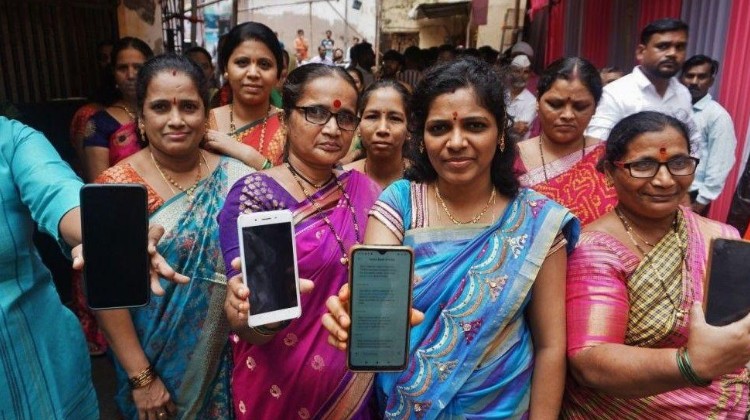
Across India, 118 million adult women in 12 states now receive unconditional cash transfers from their governments.

The transfers range from 1, 000-2, 500 rupees a month — meagre sums, worth roughly 5-12% of household income, but regular.

With 300 million women now holding bank accounts, transfers have become administratively simple.

This focus on women’s economic role has also shaped politics: in 2024, pledges of women-focused cash transfers helped deliver victories to political parties in Maharashtra, Jharkhand, Odisha, Haryana and Andhra Pradesh.

Critics called it blatant vote-buying.

It also put pressure on state finances: 12 states are set to spend around $18bn on such payouts this fiscal year.

But many argue they also reflect a slow recognition of something India’s feminists have argued for decades: the economic value of unpaid domestic and care work.

Do they work?

Across studies, the majority of women had full control of the cash.

“The evidence shows that the cash transfers are tremendously useful for women to meet their own immediate needs and those of their households.

They also restore dignity to women who are otherwise financially dependent on their husbands for every minor expense, “ says Prabha Kotiswaran, a professor of law and social justice at King’s College London.

Importantly, none of the surveys finds evidence that the money discourages women from seeking paid work or entrench gender roles — the two big feminist fears.

Nor have they reduced women’s unpaid workload, the researchers find.

They do, however, strengthen financial autonomy and modestly strengthen bargaining power.

They are neither panacea nor poison: they are useful but limited tools, operating in a patriarchal society where cash alone cannot undo structural inequities.

India’s quiet cash transfers revolution is still in its early chapters.

But it already shows that small, regular sums — paid directly to women — can shift power in subtle, significant ways.

带着问题听讲解

  • 如何理解 meagre 这个词?
  • 根据文章,这些转账对女性的用处有哪些?
  • 根据文章,给女性发钱的举动反映出什么?

讲解


** 做家务发工资?印度实验给成年女性“直接打钱” **
Across India, 118 million adult women in 12 states now receive unconditional cash transfers from their governments.
印度全国上下 12 个邦,有 1.18 亿成年女性正在从政府获得无条件的现金转账。
The transfers range from 1,000-2,500 rupees a month — meagre sums, worth roughly 5-12% of household income, but regular. With 300 million women now holding bank accounts, transfers have become administratively simple.
这些补贴金额在每月 1000 到 2500 卢比之间——尽管数额不高,大约占据家庭收入的 5%-12%,但是很稳定。印度现在有 3 亿女性拥有银行账户,在行政管理的层面上,发钱变得简单了。
This focus on women's economic role has also shaped politics: in 2024, pledges of women-focused cash transfers helped deliver victories to political parties in Maharashtra, Jharkhand, Odisha, Haryana and Andhra Pradesh.
对女性经济角色的关注,也改变了政治的局面:2024 年,对女性补贴的政策承诺已经帮助不同政党在马哈拉施特拉邦、贾坎德邦、奥里萨邦、哈里亚纳邦和安得拉邦获得胜利。
Critics called it blatant vote-buying. It also put pressure on state finances: 12 states are set to spend around $18bn on such payouts this fiscal year.
批评者称这种行为是在赤裸裸地用钱买选票。它也对各邦的经济带来压力:这 12 个邦将在这个财年中为每月的女性补贴耗费 180 亿美金。
But many argue they also reflect a slow recognition of something India's feminists have argued for decades: the economic value of unpaid domestic and care work.
但许多人认为,这些举动也反映出了印度社会对于女权主义者数十年来诉求的缓慢认可:无偿的家务和照料具备相应的经济价值。
Do they work?
发钱有用吗?
Across studies, the majority of women had full control of the cash.
在多项研究调查中,绝大多数女性都能完全由自己支配这些现金。
"The evidence shows that the cash transfers are tremendously useful for women to meet their own immediate needs and those of their households. They also restore dignity to women who are otherwise financially dependent on their husbands for every minor expense," says Prabha Kotiswaran, a professor of law and social justice at King's College London.
“证据表明,这些转账对女性来说极为有用,它们可以满足女性自身以及家人的紧急需求。它们也可以帮助女性恢复尊严,没有这笔钱的话,在经济上,她们就不得不在任何一笔小小的开销上都得依赖自己的丈夫。”普拉巴·科蒂斯瓦兰说道,她是英国伦敦大学国王学院的一位法律与社会正义专业的教授。
Importantly, none of the surveys finds evidence that the money discourages women from seeking paid work or entrench gender roles — the two big feminist fears.
重要的是,没有任何一份调查找到证据表明,这笔钱会降低女性寻找有偿工作的愿望,或者会进一步加深性别分工——这是女权主义的两大恐惧。
Nor have they reduced women's unpaid workload, the researchers find. They do, however, strengthen financial autonomy and modestly strengthen bargaining power. They are neither panacea nor poison: they are useful but limited tools, operating in a patriarchal society where cash alone cannot undo structural inequities.
研究者们发现,这笔钱同样也没能减少女性的无偿劳动量,不过,它们的确增强了女性的财务独立性,也略微增加了谈判的筹码。这些补贴既不是灵丹也不是毒药:它们是有用但也有限的工具,在父权社会之中运转,但在这里,仅凭现金是无法改变结构性不公的。
India's quiet cash transfers revolution is still in its early chapters. But it already shows that small, regular sums — paid directly to women — can shift power in subtle, significant ways.
印度政府默默打钱的改革还在初期阶段。但它已经展现出,定期、直接地给女性支付小额现金,也能以细小但重要的方式改变权力关系。

重点词汇

sweeping

/ˈswiː.pɪŋ/

adj. 影响广泛的,全面的

  • 相关词汇:sweep(v. 扫)
    搭配短语sweeping reforms
    搭配短语sweeping social transformations

meagre

/ˈmiː.ɡɚ/

adj. 不足的,微薄的

  • 搭配短语:a meagre diet of bread and beans
    搭配短语:a school with meagre resources

administratively
adv. 行政上,管理上

  • 相关词汇:administrative
    • 搭配短语administrative staff
    • 搭配短语administrative costs

pledge

/pledʒ/

n. 保证,承诺

  • 近义词:promise
    例句:During the campaign, candidates made bold pledges on healthcare and education.
    例句:Thousands of people made pledges to the charity campaign.

blatant

/ˈbleɪ.t̬ənt/

adj. 公然的,明目张胆的

  • 近义词:obvious
    例句:He showed blatant disrespect for the rules.

payout

/ˈpeɪ.aʊt/

n. 支付的巨款;赔偿款

  • 英文释义:a usually large amount of money that is given to someone
    搭配短语:a large insurance payout

fiscal year
财政年度,会计年度

  • 搭配短语:the budget for the coming fiscal year
    相关词汇:fiscal(adj. 财政的)
    • 搭配短语:a fiscal crisis

recognition

/ˌrek.əɡˈnɪʃ.ən/

n. 承认,认可

  • 相关词汇:recognize
    • 例句:His father recognized him at once.
    • 例句:I recognize my own shortcomings.
    例句:There is growing recognition that mental health matters.

domestic

/dəˈmes.tɪk/

adj. 家庭的;国内的

  • 搭配短语domestic arrival
    搭配短语domestic departure
    反义词:international
    搭配短语domestic violence

tremendously

/trəˈmen.dəs.li/

adv. 非常,极其

  • 相关词汇:tremendous
    • 相关词汇:tremble(v. 颤抖)
    • 搭配短语:a tremendous performance
    • 相关词汇:terrific
    例句:We all enjoyed ourselves tremendously.
    例句:She played the piano tremendously well.

immediate

/ɪˈmiː.di.ət/

adj. 急迫的;最接近的

  • 例句:Our immediate concern was to get him to hospital.

restore … to …
v. 使恢复

  • 相关词汇:restore(v. 恢复;修复)
    搭配短语:to restore public confidence
    搭配短语:to restore the economy to full strength
    搭配短语:to restore women to dignity

entrench

/ɪnˈtrentʃ/

v. 使根深蒂固;用战壕围住

  • 相关词汇:trench(n. 战壕)
    文化补充:trench coat“战壕大衣”是英国在第一次世界大战前为陆军士兵设计的大衣,用于驻扎在战壕之中,其面料十分耐磨,具有防水防风的特性,后来也成为了 Burberry 的经典款式。
    例句:These dictators have entrenched themselves politically and are difficult to move.

autonomy

/ɑːˈtɑː.nə.mi/

n. 自主独立;自治,自主权

  • 词根词缀:auto-(self)
    • 派生词:automatic
    词根词缀:nomos(law,custom)
    • 派生词:astronomy,anatomy
    例句:New regulations have severely restricted the autonomy of doctors.

panacea

/ˌpæn.əˈsiː.ə/

n. 灵丹妙药,万能之计

  • 词根词缀:pan-(all)
    词根词缀:akos(cure)
    例句:There is no panacea for the country's economic problems.

patriarchal

/ˌpeɪ.triˈɑːr.kəl/

adj. 父权制的,男性主导的

  • 词根词缀:pater
    派生词:father
    例句:I think marriage is used to uphold patriarchal control.

拓展阅读
无酬劳动的性别陷阱
一张 OECD 2021 年的统计图中,橘色圆点表示女性每日从事家务的分钟数,蓝色菱形表示男性。家务的定义是“家庭成员为了维持家庭运作和福祉而进行的无酬工作”,包括清洁、照护、教养、采买、修缮、和管理家庭的各种事务。从图中可看到两个东亚国家──日本和韩国的男性数据明显低于其他国家。由于这个统计包括所有 15-64 岁的人口,可以想见在主要生计负责者以男性为主、妇女就业率较低的国家,会造成更悬殊的差距。
欧洲福利国家透过家庭照护工作的公共化(公办幼托和长照)和育儿假等社会政策,推动有偿/无偿劳动的性别平均分工,在瑞典、挪威、丹麦,两性的有偿劳参率几乎达到相等。然而即便是这样,无偿劳动性别分工还是存在差距。
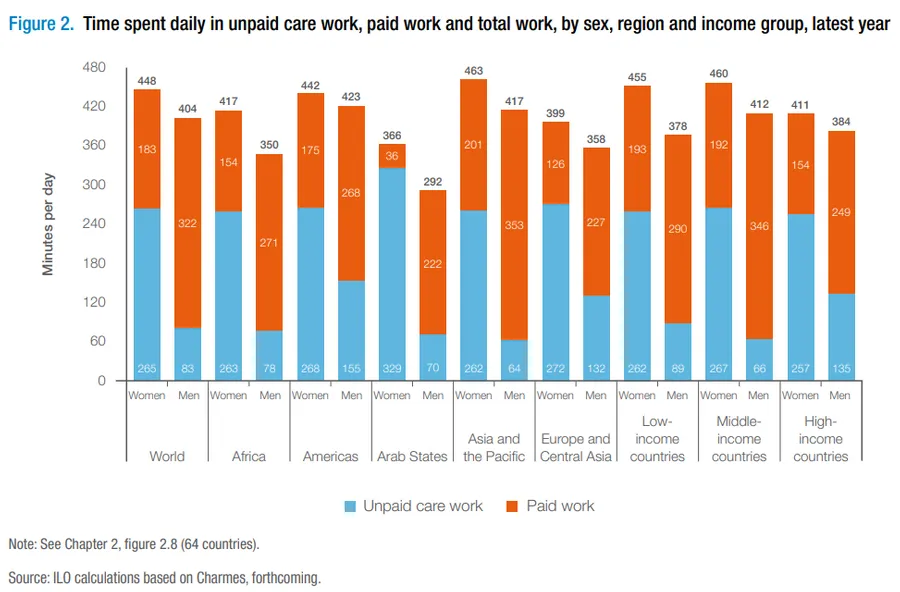
不管是由哪个组织、在哪个年代、哪个国家做什么样的统计,有一点是肯定的:女性整体的“无偿劳动时数”和下班之后的“无偿加班时数”都绝对不会少于男性。根据 ILO 国际劳工组织粗估,一年中,女性平均要花 1,118 小时(47 天)从事家务,而男性只花 572 小时(23 天)。
下图的红色部份是有酬工作时间,蓝色是无酬劳动时间,可以看到女性这两种劳动时数的总和比男性高,有酬工作的占比却比男性低很多。也就是说,女性比男性花更多时间劳动,而得到的报酬却更少。这个现象让女性整体经济地位趋于弱势,面临贫穷的风险也更高。此外,家务和事业的双重负担对女性职涯发展、就业意愿、生育意愿也有莫大的影响。
无偿家务劳动的两性分工情况,一直是性别平等评估的一项重要指标,因为这反映了女性能自由支配的时间和参与有偿工作的机会。换句话说,也就是反映了女性的经济地位和可能性。
当面对有酬的工作,人们通常很明白那和个人兴趣、能力不见得有关系,而是为了生计和糊口,不得不做。然而面对无酬家务,就会倾向认定女性在天性和能力都更“适合”负责这类工作。这是今天我们要积极检视的逻辑误区。
性别传统根植在每个人的潜意识中,针对性别的各项讨论也广泛而复杂,在这样的情况下,思考“性别带来的经济不平等”,是一个很务实、也很关键的出发点。例如女性导向的职业通常收入低于男性导向职业的问题;学校中 STEM 科目领域性别不平均的问题,都是类似的例子。而无偿劳动分工的议题,可以说是在这当中涉及层面最广、触及人群最多、影响最为深刻的一题,值得在舆论、政策上持续进行辩证和采取行动。
以上内容原载于网络,由流利说®阅读团队修改编辑。