Founded in 1965, the Mountain Bothy Association (MBA) is a registered charity that maintains "simple shelters in remote country for the use of all who love wild and lonely places".
The organisation manages more than 100 bothies in Scotland, Wales and Northern England.
The system is simple.
Bothies are free to use and open to anyone.
They can’t be booked in advance.
As long as you follow the MBA’s Bothy Code, which is based on respect for other users, the bothy and the surroundings, you’re welcome.
That is if you can find them.
Although the grid references are available online, don’t count on phone signal when looking for them, and even with a well-marked map, they can prove elusive.
Every bothy is an adapted building with a previous life.
Most are old shepherd’s huts, farmsteads or workers’ accommodation.
In the early 20th Century, hill farming declined and fewer and fewer people lived in remote locations, leaving many buildings derelict.
After World War Two, hiking and mountaineering as leisure pursuits dramatically increased in popularity and those exploring the outdoors began using these abandoned buildings as shelters.
The MBA was created by Bernard Heath and a group of friends to restore and maintain them for like-minded individuals.
Although they’re maintained, bothies are by no means luxurious.
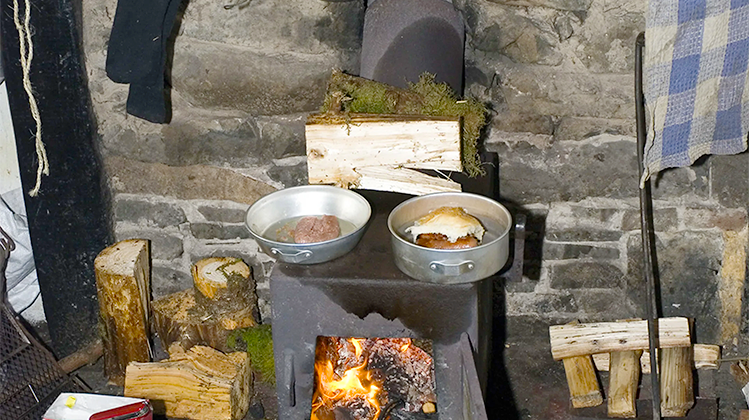
You won’t find electricity or running water and will be lucky to have a long-drop toilet.
Most will have a stove, but there’s no guarantee a supply of fuel will be there.
Your comforts are carried in, and you should pack as if you’re camping, including a tent if the bothy is overcrowded or you don’t fancy the company.
带着问题听讲解
如何理解文中提到的 elusive 一词?
文中提到的小屋最初是用来做什么的?
根据文章,这些小屋为什么受到户外爱好者的喜爱?
讲解
** 精选外刊|英国徒步者小屋:不上锁,不预定,不告诉你在哪儿 **
Founded in 1965, the Mountain Bothy Association (MBA) is a registered charity that maintains "simple shelters in remote country for the use of all who love wild and lonely places". The organisation manages more than 100 bothies in Scotland, Wales and Northern England.
The system is simple. Bothies are free to use and open to anyone. They can't be booked in advance. As long as you follow the MBA's Bothy Code, which is based on respect for other users, the bothy and the surroundings, you're welcome.
That is if you can find them. Although the grid references are available online, don't count on phone signal when looking for them, and even with a well-marked map, they can prove elusive.
Every bothy is an adapted building with a previous life. Most are old shepherd's huts, farmsteads or workers' accommodation. In the early 20th Century, hill farming declined and fewer and fewer people lived in remote locations, leaving many buildings derelict.
After World War Two, hiking and mountaineering as leisure pursuits dramatically increased in popularity and those exploring the outdoors began using these abandoned buildings as shelters. The MBA was created by Bernard Heath and a group of friends to restore and maintain them for like-minded individuals.
Although they're maintained, bothies are by no means luxurious. You won't find electricity or running water and will be lucky to have a long-drop toilet. Most will have a stove, but there's no guarantee a supply of fuel will be there. Your comforts are carried in, and you should pack as if you're camping, including a tent if the bothy is overcrowded or you don't fancy the company.