讲解人 · Jamie

原文
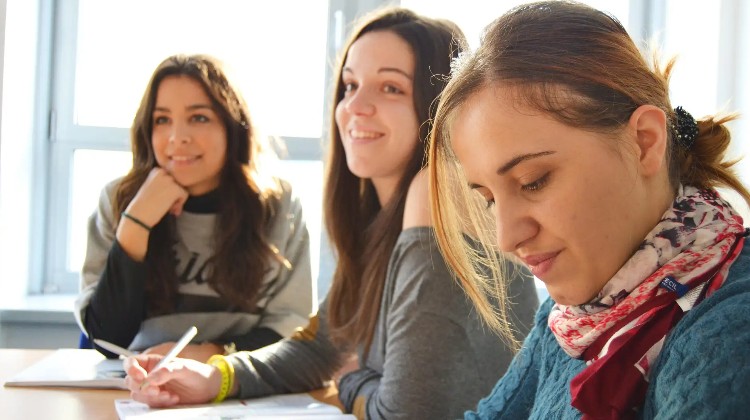
On one side of the room, Chinese students sat upright — notebooks open, pens poised, eyes fixed.
They repeated vocabulary lists, each syllable clipped and precise.
Across the room, a handful of African students lounged in casual posture, laughing, gesturing and mixing in French or English when they forgot a word.
They made endless mistakes — but they spoke.
Language, at its core, is play — imitation, risk and discovery.
Children learn by mimicry: by echoing sounds and gestures long before they understand meaning.
Adults, by contrast, study language as if it were mathematics.
We analyse grammar, parse syntax and silence ourselves when uncertain.
To master a language this way is to carry it forever in the head, not the throat — fluent in theory, mute in life.
In East Asia — China especially — this restraint is cultural.
It flows from a Confucian inheritance that prizes discipline and harmony.
Education is moral formation.
The ideal student is diligent, modest and self-controlled.
Better to be correct than alive.
Hence the paradox: Chinese students who can read Pushkin in Russian hesitate to order tea in Moscow.
China’s success in other domains came from pragmatic imitation — 摸着石头过河 (mo zhe shi tou guo he, meaning crossing the river by feeling the stones).
The same humility could transform its language education.
To imitate is not to bow; it is to connect.
To recover play requires courage — from students and teachers alike — to tolerate disorder, laughter and imperfection.
A playful classroom hums with trial and error, mimicry and joy.
带着问题听讲解
- 如何理解 imitate 这个词?
- 文中有哪些与“克制”相关的表达?
- 根据文章,为什么中国学生在语言交流中显得沉默?
讲解
重点词汇
sit in on sth.
旁听
- 相关短语:sit in(列席,旁听)
upright
/ˈʌp.raɪt/
adv. 直立地,挺直地
- 相关词汇:up(adv. 向上)相关词汇:right(adj. 正确的;直的,正的)词性拓展:upright(adj. 直立的,挺直的)
- 例句:Chinese students maintained an upright posture while sitting.
- 相关词汇:posture(n. 姿态,姿势)
poised
/pɔɪzd/
adj. 作好准备的,摆好姿势的
- 例句:His finger was poised on the camera's shutter release.
- 相关词汇:shutter release(n. 快门按钮)
syllable
/ˈsɪl.ə.bəl/
n. 音节
clipped
/klɪpt/
adj.(说话声音)清脆快速的
- 相关词汇:clip(v. 修剪)
lounge
/laʊndʒ/
v. 懒洋洋地站(坐,躺)着
- 词性拓展:lounge(n. 客厅;(酒店、剧院等的)休息室)例句:They ate and drank and lounged in the shade.(他们在阴凉处懒洋洋地坐着,又吃又喝。)
posture
/ˈpɑːs.tʃɚ/
n. 姿态,姿势
gesture
/ˈdʒes.tʃɚ/
v. 做手势,用动作示意
- 词性拓展:gesture(n. 手势,示意动作)
- 例句:He made a gesture of apology.
例句:He gestured towards the door. 'Get out.'
at its core
本质上,就其内核而言
- 相关词汇:core(n. 核心,最重要的部分)
- 例句:He has the ability to get to the core of the problem.
mimicry
/ˈmɪm.ɪ.kri/
n. 模仿;拟态
- 词义辨析:mimicry, imitation
- mimicry 和 imitation 都有“模仿”的意思,区别在于,imitation 可以是行为、声音上的模仿,也可以更宽泛一些,指整体风格、思路等的模仿学习,比如 The remake of the movie was a pale imitation of the original.(这部电影的翻拍版是对原作的拙劣模仿。)而 mimicry 通常是声音、动作、外形的精准复制,有以假乱真的感觉,比如生物学上的拟态就是 mimicry。
相关词汇:mimic(v. 模仿,学…的样子)- 例句:He could mimic all the teachers' accents.
parse
/pɑːrs/
v. 对(句子)作语法分析
- 相关词汇:part(n. 部分)搭配短语:to parse a sentence
syntax
/ˈsɪn.tæks/
n. 句法,句子结构
silence
/ˈsaɪ.ləns/
v. 使安静,使沉默
- 词性拓展:silence(n. 沉默)例句:Their performance silenced their critics.(他们的表现让批评者哑口无言。)
mute
/mjuːt/
adj. 沉默的,无声的
- 词性拓展:mute(v. 减轻…的声音;使静音)例句:Her footsteps were muted by the thick carpet.例句:Before the movie starts, please remember to mute your phone.
flow from
由…产生
- 相关词汇:flow(v. 流动)例句:His confidence flows from years of experience.
Confucian
/kənˈfjuː.ʃən/
adj. 孔子的,儒家的
- 相关词汇:Confucius(n. 孔子)
inheritance
/ɪnˈher.ɪ.təns/
n.(仍对人们有影响的思想、技艺、文学等)遗产;(钱财等)遗产
- 相关词汇:inherit(v. 继承)
- 例句:He inherited a fortune from his grandmother.
prize
/praɪz/
v. 重视,珍视
- 词性拓展:prize(n. 奖赏,奖品)
formation
/fɔːrˈmeɪ.ʃən/
n. 形成,构成
- 相关词汇:form(v. 形成,构成)
hence
/hens/
adv. 因此
- 词义辨析:hence, therefore
- hence 比 therefore 更加正式、书面,而且后面可以直接接名词。比如 The coffee here is the best, hence the long line every morning.(这家店的咖啡最好喝,所以每天早上都排长队。)
paradox
/ˈper.ə.dɑːks/
n. 自相矛盾的情况;悖论
pragmatic
/præɡˈmæt̬.ɪk/
adj. 讲求实际的,务实的
- 词根词缀:pragma(行为,行动)搭配短语:a pragmatic approach to doing sth.
humility
/hjuːˈmɪl.ə.t̬i/
n. 谦逊
- 相关词汇:humble(adj. 谦逊的)
bow
/baʊ/
v. 屈从;鞠躬
- 例句:She would never bow to such unreasonable demands.(她绝不会屈从于这种无理的要求。)
playful
/ˈpleɪ.fəl/
adj. 欢快的,有趣的;爱玩的,活泼的
- 例句:The playful puppy chased its own tail in circles.(那只爱玩的小狗追着自己的尾巴转圈。)例句:There was a playful energy at the street fair.(街头集市上洋溢着一种欢快活泼的气息。)
- 相关词汇:fair(n. 集市)
hum
/hʌm/
v. 忙碌,嘈杂;发出嗡嗡声,嗡嗡作响
- 例句:The kitchen hummed as the dinner service began.搭配短语:hum with sth.(充满……,因而显得活跃、忙碌)
拓展阅读