Last week, Mattel launched its first autistic Barbie.
Coming barely six months after its first doll with type 1 diabetes, this newest addition to Barbie’s Fashionistas range is designed so that more children “see themselves in Barbie”.
Autism is a form of neurodivergence that influences how people experience and interact with society.
While characteristics of autism vary according to the individual, more than one child in a hundred is believed to be autistic, according to the World Health Organization.
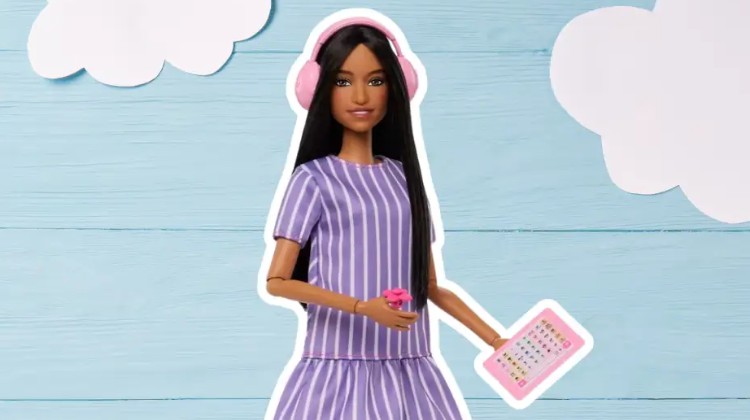
The doll’s eyes gaze slightly to one side, reflecting how some autistic people avoid direct eye contact.
She has fully bendable elbows and wrists, enabling repetitive physical movements such as stimming and hand-flapping that help some people with autism to process sensory information or express excitement.
She has a (pink, of course) fidget spinner on her finger that helps reduce stress, wears (pink) noise-cancelling headphones to reduce sensory overload and carries a (yes, you’ve guessed it, pink) tablet with symbol-based augmentative and alternative communication buttons on its screen to help her cope with everyday communication.
While the first Barbies date to 1959, until 2019 there were no dolls with disabilities.
Now there are blind dolls, as well as Barbies in wheelchairs, with Down syndrome, prosthetic limbs, vitiligo and hearing aids.
There is also a Ken doll with a prosthetic leg, another who uses a wheelchair with a ramp, and one with hearing aids.
Announcing the autistic Barbie, Jamie Cygielman, the global head of dolls at Mattel, said it was the latest expansion of the company’s commitment to representation and inclusion.
Barbie is not the only brand to make autistic dolls.
Lottie sells dolls with autism, while Lego sells a variety of minifigures with non-visible disabilities.
带着问题听讲解
如何理解 fashionista 这个词?
根据文章,这款自闭症芭比如何体现对自闭症特征的关注?
根据文章,美泰推出这款芭比想要体现什么?
讲解
** 玩具里的“被看见”:美泰推出“自闭症款”芭比娃娃 **
Last week, Mattel launched its first autistic Barbie. Coming barely six months after its first doll with type 1 diabetes, this newest addition to Barbie's Fashionistas range is designed so that more children "see themselves in Barbie".
Autism is a form of neurodivergence that influences how people experience and interact with society. While characteristics of autism vary according to the individual, more than one child in a hundred is believed to be autistic, according to the World Health Organization.
The doll's eyes gaze slightly to one side, reflecting how some autistic people avoid direct eye contact. She has fully bendable elbows and wrists, enabling repetitive physical movements such as stimming and hand-flapping that help some people with autism to process sensory information or express excitement.
She has a (pink, of course) fidget spinner on her finger that helps reduce stress, wears (pink) noise-cancelling headphones to reduce sensory overload and carries a (yes, you've guessed it, pink) tablet with symbol-based augmentative and alternative communication buttons on its screen to help her cope with everyday communication.
While the first Barbies date to 1959, until 2019 there were no dolls with disabilities. Now there are blind dolls, as well as Barbies in wheelchairs, with Down syndrome, prosthetic limbs, vitiligo and hearing aids. There is also a Ken doll with a prosthetic leg, another who uses a wheelchair with a ramp, and one with hearing aids.
Announcing the autistic Barbie, Jamie Cygielman, the global head of dolls at Mattel, said it was the latest expansion of the company's commitment to representation and inclusion.
Barbie is not the only brand to make autistic dolls. Lottie sells dolls with autism, while Lego sells a variety of minifigures with non-visible disabilities.