讲解人 · John

原文
Globally, people drink an estimated 45 billion gallons of it each year in a wide range of styles.
One specific style remains inextricably tied to Jingmai Mountain.
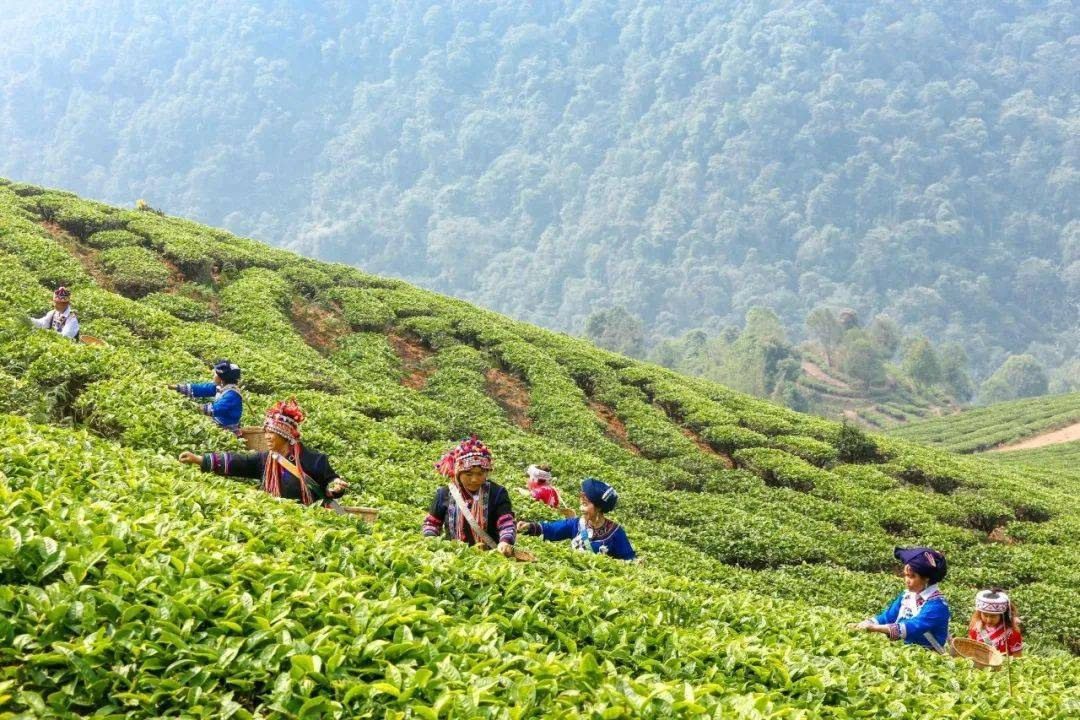
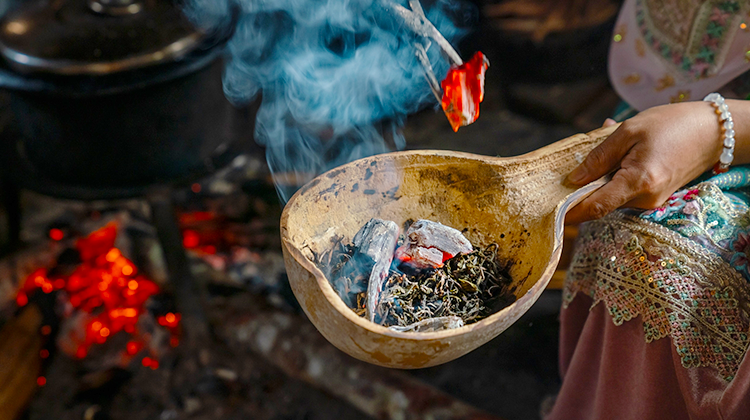
For more than a millennium, the Blang people, along with another Indigenous group called the Dai, have continuously maintained ancient groves that produce black tea, including the mountain’s dark, rich Pu’er tea.
The Blang people’s tea spirit is based on a real person.
Around the 10th century, Pa Aileng led his people to settle in Jingmai, where he discovered the medicinal properties of wild tea plants and began to domesticate them.
Near the end of his life, Pa imparted wisdom that’s still recounted by farmers here.
“I can give you cattle, but they might die of diseases, “ Pa is remembered to have said.
“I can give you gold, but you might squander it.
So I am going to give you tea trees, which can provide riches for generations.”
The Blang people believe that everything has a soul, a reminder to leave nature undisturbed, so in tending the forests they avoid pesticides and herbicides as well as aggressive practices such as pruning.
New research shows the agroforestry techniques practiced in Jingmai continue to be effective.
A recent study by Minzu University of China found that tea produced from the mountain’s high-altitude trees was less bitter than tea cultivated from trees at lower altitude.
“Jingmai Mountain is like an old tea tree that has both a unique history and a powerful contemporary life force that continues to grow, “ says Zuo Jing, a professor at Anhui University.
带着问题听讲解
- 如何理解 agroforestry 这个词?
- 高山的茶树所产茶叶有什么特点?
- 布朗族如何保护茶树和自然环境?
讲解
重点词汇
beverage
/ˈbev.ɚ.ɪdʒ/
n. 饮品
- 近义词:drink(n. 饮品)例句:I picked up some beverages on the way home.(我在回家的路上买了些饮料。)
inextricably
/ˌɪn.ɪkˈstrɪk.ə.bli/
adv. 密不可分地
- 相关词汇:extricate(v. 使摆脱,使脱离)
- 例句:It took hours to extricate the car from the sand.(用了几个小时才把陷进沙地里的车拉了出来。)
相关词汇:extricable(adj. 摆脱得了的,能脱离的)相关词汇:inextricable(adj. 不能脱离的,分不开的)- 词根词缀:in-(表示否定)
搭配短语:be inextricably linked to / bound up with(紧密相连,密不可分)
millennium
/mɪˈlen.i.əm/
n. 一千年;新千年开始之际
- 相关词汇:million(n. 百万)搭配短语:at the turn of the millennium(在千禧年之交)
indigenous
/ɪnˈdɪdʒ.ə.nəs/
adj. 本土的,土生土长的
- 近义词:native(adj. 土著的,土生土长的)例句:Pandas are indigenous / native to China.文化补充 :Indigenous 用来指土著民族、原住民时,首字母 I 常常大写。
grove
/ɡroʊv/
n. 小树林
medicinal
/məˈdɪs.ɪ.nəl/
adj. 药用的,用于治疗的
- 词义辨析:medicinal,medical
- medical 表示“医学的,医疗的”,是和医学、医疗领域相关的,比如 medical research(医学研究)、medical staff(医务人员)。而 medicinal 是形容某种物质、植物是药用的,有疗效的,比如 medicinal herbs(药草)。
property
/ˈprɑː.pɚ.t̬i/
n. 属性,特性
domesticate
/dəˈmes.tɪ.keɪt/
v. 驯养,驯化;人工培植
- 相关词汇:domestic(adj. 国内的,本国的;家庭的,家事的;家养的,驯养的)
- 搭配短语:domestic violence(家庭暴力)
- 搭配短语:domestic pets(家养宠物)
impart
/ɪmˈpɑːrt/
v. 传授,告知
- 英文释义:to give information, knowledge, wisdom etc to someone例句:The teachers imparted a great deal of knowledge to their pupils.
recount
/rɪˈkaʊnt/
v. 叙述,描述
- 英文释义:to tell someone a story or describe a series of events例句:The story is narrated by Ted, who recounts to his children the events leading up to meeting their mother.(故事的叙述人是 Ted,他向孩子们讲述是哪些事情让他认识了他们的妈妈。)
squander
/ˈskwɑːn.dɚ/
v. 浪费,挥霍;糟蹋(机会)
- 例句:The team squandered a number of chances in the first half.(这支队伍在上半场浪费了几次机会。)
riches
/ˈrɪtʃ.ɪz/
n. 财富,财产
- 搭配短语:from rags to riches(从贫穷到富裕)
- 相关词汇:rags(n. 破旧衣服)
- 搭配短语:the story of her rise from rags to riches(她白手起家的故事)
pesticide
/ˈpes.tə.saɪd/
n. 杀虫剂
- 词根词缀:-cide(表示“杀死”)
- 相关词汇:suicide(n. 自杀)
相关词汇:pest(n. 害虫)
herbicide
/ˈhɝː.bɪ.saɪd/
n. 除草剂
- 相关词汇:herb(n. 草本植物)
aggressive
/əˈɡres.ɪv/
adj. 过分自信的,放肆的;积极进取的,有冲劲的;好斗的,挑衅的
prune
/pruːn/
v. 修剪(树枝);删除,删节
- 例句:The roses need pruning.例句:The original version of the text has been pruned quite a bit.
agroforestry
/ˌæɡ.roʊˈfɔːr.ə.stri/
n. 混农林业,农林复合系统
- 相关词汇:forestry(n. 林业)词根词缀:agro-(表示“农业的,与农业有关的”)文化补充:混农林业是一种将农业与林业相结合的土地利用方式,方法是将农地上的农作物与多年生木本植物(如乔木、灌木等)交互种植,使单位农地上的作物产量增加并使生产多元化,有时也会与家畜、养蜂、渔塭等农业相互结合。
altitude
/ˈæl.tə.tuːd/
n. 海拔(高度)
- 例句:We're flying at an altitude of 40,000 feet.(我们的飞行高度是 4 万英尺。)
拓展阅读